Wednesday, October 31, 2012

#15 GLAXOSMITHKLINE CONSUMER HEALTHCARE


Now that it’s time to write about Prince Charles, I find myself facing the opposite problem I faced before writing about his father. I essentially knew nothing about Prince Philip…but part of me thinks I might already know too much about Prince Charles. I watched—just as you probably did too—as his personal life spun out of control in the 1990s, in a spiral of infidelity, telltale diaries by members of his house staff, and scathing private telephone conversations made public. For years we got too much information about this man. If you’re like me and you could really do without learning any more incredibly personal details about Prince Charles, then don’t worry; the factoid I’m about to share is a fairly innocuous one. Prince Charles brushes his teeth with Maclean’s brand toothpaste, which is made by Glaxosmithkline. Glaxosmithkline Consumer Healthcare holds a Royal Warrant from HRH the Prince of Wales as “Suppliers of Toothpaste.”


Just as I did with Queen Elizabeth II and Prince Philip, I began my research on Prince Charles at the Chicago Public Library. There’s no shortage of books written about the heir to the British throne, but nearly all of those taking up shelf space at the library told the story of his marriage to Princess Diana, of her tragic death, and of his somewhat scandalous remarriage to his longtime lover Camilla. Certainly I’ll get to this aspect of his life soon enough, but for now I just want to know more about the prince’s childhood. It doesn’t seem possible—when scanning the descriptions of more recent biographies—to understand who Prince Charles was before his train wreck of a marriage clouded the lens of public perception about him. That’s maybe why a biography published in 1979 caught my eye. For the past week I’ve been reading The Man Who Will Be King: H.R.H. by Tim Heald and Mayo Mohs. Although Heald and Mayo spend a lot of time speculating about whether Prince Charles will ever get married and who he will select as his possible bride, Diana’s name never crosses their long list of his girlfriends and potential suitors. To get this early look at Prince Charles without any mention of Diana is therefore fascinating and refreshing.

Unlike his mother, who did not become heir to the throne until unexpected circumstances prevailed, Prince Charles was born with the expectation that he would one day be king. His mother’s pregnancy was closely followed by the British public, who wondered if Princess Elizabeth would produce a male heir. She did just that on November 14, 1948, in Buckingham Palace. As news of the birth leaked out to the media, a celebratory crowd gathered outside of Buckingham Palace, and the noise grew so loud that the new family couldn’t sleep. Heald and Mohs share that it was actor David Niven—among the many people in the crowd—who finally convinced everyone to quiet down.

The intensity of the public gaze on Charles has continued throughout his entire life, has never subsided for one second. That’s probably why—when he brushes his teeth each day—he reaches for a turquoise tube of Maclean’s whitening toothpaste. He must look his best at all times. As their old commercials from the 1970s suggest, “every time you smile it shows...it shows you chose Maclean’s.”

In 2002 an embarrassing rumor surfaced that the Prince employed a valet to squeeze his toothpaste onto his toothbrush for him. The article was meant to shed light on the large number of paid employees staffing his royal residence. This was picked up in newspapers from London to Sydney, where the Morning Herald complained:

His lifestyle would seem extravagant even to France’s “Sun King” Louis XIV: a team of four valets so that one is always available to lay out and pick up his clothes; a servant to squeeze his toothpaste on to his brush, and another who once held the specimen bottle while he gave a urine sample. Step into the world of the Prince of Wales, a lifestyle so pampered that even the Queen has complained that it is grotesque.
 
Although the story got a lot of press in that year, more recent articles suggest it was nonsense. (Or at least the part about someone getting his toothbrush ready for him).


I’ve been squeezing Maclean’s onto my own toothbrush for about a month now, and I love this stuff. I’ve been a consistent Crest user all my life and—while I’ll certainly go back to using Crest when the Maclean’s runs out—that’s only because I don’t think you can easily buy it here in the U.S. Maclean’s has a much better taste than Crest, and it doesn’t leave the same kind of aspartame-y aftertaste in my mouth. I started to worry last week that maybe taste isn’t everything and that I’d have a mouth full of cavities when I went to my upcoming dentist appointment. When I saw my dentist, though, I got the opposite report. I didn’t have a single cavity, and the dental hygienist said my teeth look great.
 

Where to buy: Maclean’s is sold in the United Kingdom, the Middle East, Africa, Australia, and New Zealand. If you live in the U.S., you can still buy it from Amazon.com or from Britsuperstore.com, a website I think I’m going to have to learn more about...

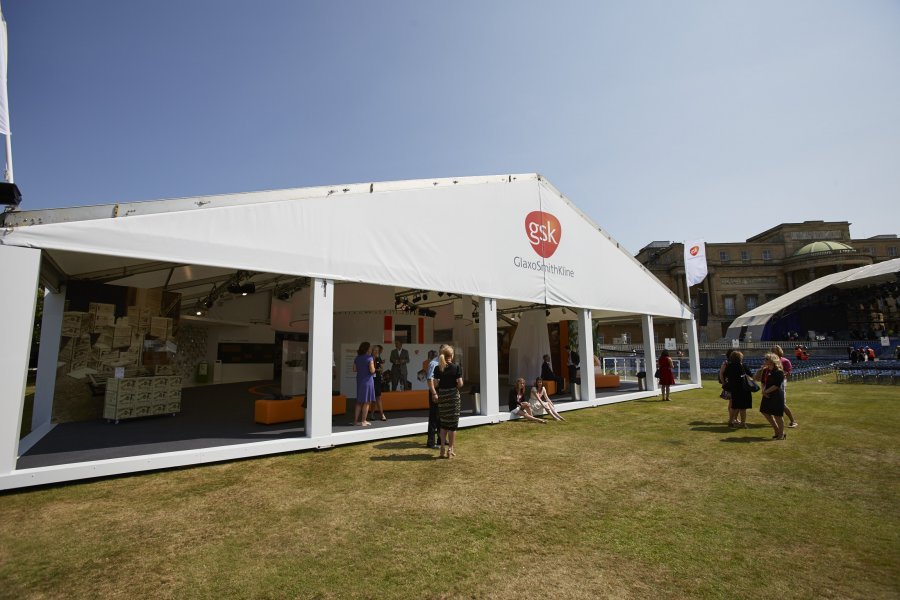
Photo credit: GlaxoSmithKline's tent at the 2013 Coronation Festival at Buckingham Palace, courtesy of Theo Cohen Photography.

Friday, October 19, 2012

SPENCER'S JOLLY POSH FOODS


When you sample, ponder, and write about British consumer products as much as I have lately, you really start to miss Great Britain. I haven’t spent much time there, but when I was there I was thrilled to find it was just as special as I’d always believed it to be. I knew I couldn’t wait to get back. Yet getting back is something of an impossibility right now. We’ve been trying to experience and examine this idea of royalty right here in our own backyard, but our project has its limits. Lately I’ve been looking a little harder for ways to experience British culture in Chicago and thinking about a series of field trips.

Our first field trip? To Spencer’s Jolly Posh Foods in Lakeview.


It was my friend Suzy who tipped me off about Spencer’s in an email titled “a tiny british grocery store in the city!” Spencer’s is located right near the corner of Southport Avenue and Irving Park Road, which places it conveniently up the street from Southport Grocer, Julius Meinl, and Sensational Bites. I’m pretty familiar with this dessert corridor already. Our foursome set out midday last Sunday—in the midst of a rainstorm—to check it out.

When we got to the front door we were drenched and chilly, so it was wonderful to walk into the shop’s cozy interior. Right away it reminded me of A. Gold or Verde & Company—two quaint British food stores located in London’s East End, just a stone’s throw away from Spitalfields Market. Both stores go for a kind of “village store” feel, and that’s just what we found here.


The walls at Spencer’s were lined with shelves that held little tins and jars and packets and bottles with everything from jam to tea to mustard to chocolates. Maybe you have to have tried as hard as I have lately to get your hands on some of these British foods to fully appreciate the selection, but it was all there: McVitie’s dark chocolate digestive biscuits and HobNobs, a complete selection of Twinings teas, Wilkin & Sons Tiptree preserves, Colman’s Season & Shake packets, Cadbury chocolates, Robinson’s barley water (you know you have to water it down, right?), HP Sauce in four different flavors.


We happily scooped up what we’d been craving—two tins of McVitie’s biscuits for me, HobNobs for our friend Krysten, chocolate caramel biscuits for Adam, Cadbury white chocolate drops for Nathan, HP barbeque sauce, and a box of Darville’s of Windsor tea bags.


As we shopped (and as Nicholas snoozed in an Ergo baby carrier strapped to my chest, as Nathan attempted to grab every single package of candy at his eye level), we took in our surroundings. There’s a large kitchen table placed, English-style, in the center of the store where guests can take tea and enjoy freshly baked scones. The walls are full of British posters and old advertisements and signs.


The best part of our visit was chatting with the guy behind the counter. Upon seeing us enter the store drenched, he quipped, “We had the rain brought in special for you” in a fantastic British accent. You don’t hear that much around Chicago. He answered about a trillion questions I had about the store and the business; we learned that it’s run by a Brit called Nicholas Spencer and that the store opened just three months ago but the Spencer’s brand has been in use for quite a while longer—selling British packaged meats like back bacon and bangers (think: sausages) on the Internet. Spencer’s runs British food stands at farmers markets around the city, and they’re hoping to soon sell this fresh food in their store.


We absolutely cannot wait to go back. I’m even thinking of getting really adventurous and buying some sausages to make bangers and mash.

Where to find it: If you're in Chicago, you should visit the store at 1405 W. Irving Park Rd. You can also buy Spencer’s prepared meats on the website.

Sunday, October 14, 2012

#14 NESTLE UK LTD


So far it’s been pretty difficult for Baby Nicholas to join our Royal Warrant testing panel. The kid doesn’t consume a lot besides breast milk, formula, diapers, and baby lotion, so we can’t be sure how he feels about tea, metal cleaner, or mustard. A couple of weeks ago, without even thinking about it, we bought a Royal Warrant product especially for him: Gerber baby rice cereal. In the U.S., Gerber has recently partnered with global food company Nestlé, which holds a Royal Warrant from Her Majesty the Queen as “Manufacturers of Nestle Products.”

Baby rice cereal is the simplest food you’re ever going to make. Actually, that’s not correct. Baby rice cereal should be the simplest food you’re ever going to make. To prepare a single serving for one baby, you stir the powdered, shimmery rice flakes into breast milk or formula until they dissolve into a too-thin, watery mixture. You then start feeding it to your baby, but the whole time you’re thinking this is just a little bit too thin. So then you add another tiny shake of the rice flakes. Only, your arm always slips, and you always add about three tablespoons too much. I’m not sure how this happens, but I promise you that this always happens. And then the mixture has turned to concrete. Your baby is glaring at you: What did you do?! And pretty soon you’re mixing up more formula or heating up more breast milk to water it down further, but while you’re doing that your baby starts freaking out: Forget it! I don’t even want it now! I finally learned my lesson with Nathan, but that means that Nicholas always eats too-thin rice cereal.

I thought I’d put my rice cereal problems behind me. I’m an old pro at this now! Nicholas had been eating it pretty well for a few days when I caught a story on Today a couple of weeks ago. Essentially the news report claimed that American rice is loaded down with very high levels of arsenic, a known carcinogen. This is especially bad for infants, whose solid food diet is sometimes limited to rice cereal alone. I thought immediately of Nicholas because at that time, rice cereal was the only solid food he was eating.


We’ve now replaced our Gerber rice cereal with Gerber oatmeal. Yes, I can appreciate the irony here. It’s not unlike the English professor Adam and I had in college who announced he’d decided to boycott Coca-Cola for unnamed reasons. He entered class the next day drinking a Dasani water, so we helpfully pointed out to him that Coca-Cola owns Dasani. The next day he came into class drinking MinuteMaid lemonade. “You know that’s owned by Coca-Cola too, right?” one of our classmates asked him. He admitted he did not know. “Are you buying all of these out of the Coke machine around the corner?” Adam asked. He nodded. The next day he came to class drinking a Coke again.

But I digress. Gerber put out a statement saying that its rice cereal has been made with California rice since the beginning of 2012 because California rice has far lower levels of naturally occurring arsenic. Based upon my research, this is accurate. The highest levels of arsenic come in brown rice grown in Arkansas, where arsenic was long used as a pesticide on cotton crops. It leached into the soil and has stayed put ever since.

God only knows what’s lurking in our oatmeal, but Nicholas’s diet on paper at least looks pretty healthy: breast milk, formula, oatmeal, homemade peas, apples, and sweet potatoes. I find again with my second child that it’s scary to transition from breastmilk—the safest, most perfect food for a baby—to food that comes from the somewhat irksome and poorly-regulated American food supply.

I wonder if Queen Elizabeth also feared the transition away from breastfeeding. Biographer Robert Lacey shares in Monarch that Elizabeth breastfed Prince Charles, her first baby. I worry this little factoid is only interesting to me because I’m currently breastfeeding. If that’s true, I’m sorry. If it’s not true, let’s continue on.


Have you ever breastfed a newborn baby? Yikesy. That’s a lot of new to get used to. I live in a world of Boppy and My-Brest-Friend pillows, of supportive husbands, and nursing covers with a thin, curved wire that allow ultimate privacy but also eye contact with a breastfeeding infant. There are state and federal laws that guarantee me the right to breastfeed my baby in public, even if I’m not wearing one of those expensive nursing covers. In many ways, it’s a fantastic time to be a breastfeeding mother, but any mom will tell you it’s still not without its difficulties. There are people who go out of their way to glare at you and make you feel uncomfortable...there are the long days of maternity leave that seem to string together as one big, long nursing session...there’s the two 20-minute breaks I take at work each day to cozy up to a breast pump. It’s not very appealing stuff. Someone with royal blood should be able to get out of some of the unpleasantries of being a nursing mother...but money and bloodline really don’t buy everything. In this case, they don’t buy your breastmilk going into your baby’s mouth without you being pretty actively involved.

I like that Queen Elizabeth nursed her baby. It makes me feel close to her in a way that transcends money, social class, age, and nationality. Just like me, she has had to answer to a hungry, unreasonable child waking up for a midnight snack. That makes her seem more like a real person and less like a distant monarch.

While we’re talking about “real,” Nestlé promises to provide Nicholas and the rest of our family real nutrition for the rest of our lives. Manufacturing everything from bottled water to KitKat bars, the company has something for everyone. In all of the research I’ve done on Royal Warrant products, Nestlé's website seems to make some of the boldest claims. Consider what it says about the British food brand Herta: “Frankfurters are the ultimate family meal: tasty, inexpensive and quick.” Huh. The Nestlé logo on the back of our baby cereal comes with the advice to “start your child on a course to healthy nutrition,” as if to suggest I'm doing just that by buying Nestlé-branded baby food products. And what does Nestlé claim about the chocolate bars for which it’s so well-known? They’re good for you: “Long known for great taste and enjoyment, Nestlé chocolate and confectionary products are also full of intrinsic goodness, contributing to well-being.”


Whatever. To revisit the Britvic debate, does this manufacturer of food and nutrition products deserve a Royal Warrant? In recent years, Nestlé has arguably pushed global social justice issues into the forefront of its company mission. It also sponsors programs such as the Nestlé Social Research Programme, which is committed to improving the lives of people under 35.

Perhaps this is a company you can feel good about...even if you are at times feeding your child a food you can’t be sure about.

Where to buy: For British candy, try Amazon or World Market.

Saturday, October 6, 2012

#13 TANQUERAY GORDON & CO LTD


When we visited London last summer, Adam had to stop me from going crazy buying Kate and William souvenirs in the gift shop at Westminster Abbey. I didn’t even ask if he was interested in seeing the special display of wedding photos on exhibition there. If the wedding did nothing for Adam, he was certainly in the minority. What is it about a royal wedding that pulls people in like a magnet, that convinces people burdened by their own lives and problems to turn their attention so fully to the love lives of people they’ve never met?


The British people in 1947 were no exception. Historians refer to the United Kingdom in this juncture as “Austerity Britain,” a bombed-out country still rebuilding from the one-two punch of the Great Depression and World War II. This austerity proved to be a somewhat awkward backdrop for the lavish wedding of Princess Elizabeth and Philip Mountbatten. The British people also weren’t completely sold on Philip. Just what kind of family did this prince in exile come from? And was he good enough for Princess Elizabeth? Maybe it shouldn’t be surprising that, on his wedding day, Prince Philip arrived at the altar fresh from drinking a gin and tonic. Tanqueray Gordon & Co Ltd holds a Royal Warrant from Queen Elizabeth II as “Gin Distillers.”

I know very little about the November 1947 wedding of Elizabeth and Philip, but that needn’t be the case. The BBC’s online archives include a 17-minute newsreel of the day that is an interesting watch even if it does lack sound. In a 2007 article published in the Telegraph to mark the 60th anniversary of this wedding, author Elizabeth Grice did a nice job contrasting the royal wedding with Britain’s harsh economic reality, especially when describing the crowds that came to view public displays of the royal couple’s wedding gifts in 1947:

“To a make-do-and-mend nation, still rationed to 1 oz bacon and 2 oz butter a week, and encouraged to cook a sea creature called snoek* (‘best not to try serving it as it is’), the display had a surreal quality.”


A lavish wedding in the face of austerity: sure, I can relate to that. I planned my own wedding when I was a graduate student living off a tiny stipend each month. It seemed strange to plan seating arrangements and select menus and think about cake flavors for a far-off party when I had a budget of $25 a week to spend on groceries. Princess Elizabeth was on a budget leading up to her wedding too, at least in the sense that she was limited by ration coupons. The royal family famously participated in the ration program during and immediately after World War II in order to show solidarity with the British people. Although they did make a good faith effort to limit their purchases, they were also allotted far more ration coupons than anyone else. Grice writes that British women were so excited for Princess Elizabeth’s wedding that they mailed her their ration coupons to help her pay for her wedding dress. (It was illegal to give them away, so these were promptly returned).

Let’s get back to the gin. Grice describes Prince Philip post-G&T on his wedding day as “fortified” and looking “as if he was enjoying himself.” Interesting. God knows what Princess Elizabeth thought of this drinking, but we do have a clearer picture of her views on gin now. In the first episode of Monarchy: The Royal Family at Work, a BBC television program (re-aired in the States on PBS) in which camera crews were given unprecedented access to the Queen’s schedule, the Queen’s personal bartender (actually he’s called the Yeoman of the Cellars) gives a tutorial on how to make her favorite drink. It consists of one part Tanqueray gin, two parts Dubonnet, one lemon slice, and two ice cubes. You don’t just throw all of that in a cup and hope for the best either. First you pour in the gin—then the Dubonnet. Next you lay the lemon slice very gently into the liquid to avoid splashing the sides of the cup. Then you put the two ice cubes on top of the lemon. The most important thing to know about this cocktail? The Queen is the only one allowed to drink it. In a party at Buckingham Palace, it is prepared for her and taken to her alone on a serving tray. No one else can have one...not even Prince Philip.


It’s a good thing too. This drink was a bit strong for me, although maybe I could build up a tolerance if I drank one every day before lunch, as the Queen is reported to do. Right now, if I had more than one of these cocktails, I’d probably be able to convince myself I was the Queen of England.

Where to buy: Tanqueray and Dubonnet are readily available in American liquor stores. If you want your own personal Yeoman of the Cellars to make it for you, that’s a little less accesible. 

*I was hoping for something that resembled the Loch Ness Monster and/or an eel. Don’t get your hopes up—it’s just a fish.

Saturday, September 29, 2012

#12 BRITVIC SOFT DRINKS LTD


So many of the products with Royal Warrants selected by Queen Elizabeth are affordable and easily accessible, even for middle class Americans. While I love that the list of her favorite things is not limited to such luxury brands as Jaguar, Burberry, and Bollinger, I wonder if maybe at times she goes too far in the opposite direction. Consider soft drinks. Does a soft drink company really deserve the royal seal of approval? Britvic Soft Drinks Ltd holds a Royal Warrant from Her Majesty the Queen as “Manufacturers of Fruit Juices and Soft Drinks” and has since 1955.

Britvic's product line includes what the British call “fizzy drinks,” carbonated favorites with names like J20, Fruit Shoot, drench, and Tango, in addition to American brands such as Pepsi and 7Up. Britvic also makes Robinson's barley water, a drink with a somewhat mysterious name that we'll get to in just a bit. In researching Britvic, I came across an article published by the Food Commission, which terms itself “Britain's leading, independent watchdog on food issues.” The article suggests it's irresponsible of Queen Elizabeth to award a warrant to companies that produce obviously unhealthy products: “Although foods and drinks with poor nutritional profiles are an inevitable part of our everyday diet, it is questionable whether the Queen should be granting her Warrant, and the status associated with royalty, to such products.”

Perhaps there's a bit of nostalgia involved in the Queen's selection. Once World War II had ended and the princesses Margaret and Elizabeth were back to living at Buckingham Palace with their parents, Prince Philip was able to see more of the cousin he'd kept up a correspondence with since their time together at Dartmouth in 1939. They began dating, but their relationship was kept extremely private. When they appeared together in public, they did their best not to let on how close they were becoming. The only time they could really be together and be themselves was when Philip came to the palace for dinners. Elizabeth's nanny, Crawfie, chronicled these “dates” (is it really a date if your little sister won't leave you alone for a second?) in The Little Princesses, her tell-all book about her years of service to the royal family. She said when Philip came by it wasn't for a formal dinner, but for a much more private meal taken in the nursery, the sort of juvenile name still given to the girls' shared bedroom. Odd as that setup sounds (Can you eat in a nursery? Would the room still smell like dinner when you went to bed later?) she also shares a somewhat odd menu: “Food was of the simplest...fish, some sort of sweet, and orangeade.”

Orangeade. The word didn't really mean anything to me. Is this essentially an orange version of lemonade, e.g. squeezed orange juice, water, and sugar? Or would Robinson's barley water qualify as orangeade? To be sure I emailed my friend Michelle, who is British, to ask her opinion. “I would normally think of orangeade as fizzy,” she responded. “We would generally think of Robinson's barley water as being in the category of orange squash.”

Okay, so Princess Elizabeth and Prince Philip enjoyed their very first dates eating fish and drinking orange soda together. Think about it: this must be why Britvic has a Royal Warrant. Maybe every time the Queen tastes orange soda it makes her think of those youthful days of first being smitten with a handsome sailor returned from war. I can't fault her for that. Any time I eat cookie cake from a grocery store bakery, it reminds me of falling in love with Adam.

While we didn't try any of Britvic's orange soda offerings to experience this particular warrant, we did try Robinson's barley water, which is—as Michelle called it—a type of orange squash. This renegade use of the word “squash” is sort of confusing for Americans. By “squash” I'm not talking about yellow, zucchini, butternut, or any other type you associate with the vegetable squash grown here in America. I'm also not talking about the racket sport. In England they're using the word a little differently.

The first time we tried it, we hated it. I was running around like mad one morning trying to get ready for work when I realized we were completely out of the orange juice Nathan and I always drink for breakfast. I remembered the Robinson's barley water and thought maybe that could substitute for orange juice without Nathan actually noticing it was something different. I poured us each a big cup, but Nathan was first to try his.

Yucky!” he screamed in a tone that seemed over-the-top, even for a two year old.

Nathan, it's fine. It's just something new Mommy wanted to try,” I explained while loading the dishwasher with one hand and eating a piece of toast with the other.

The melodrama hadn't ended. “IT HURTS MY MOUTH!”

Before I could stop him, Nathan took his cup and chucked it into the kitchen sink. That's when I heard it. Fizzing. The barley water fizzed when it came into contact with the stainless steel sink. That scared me a little bit. What I had just given my child to drink? I took a sip of it myself and holy cow it was disgusting. Absolutely disgusting. It was thick and fizzy and saccharine—not at all what I'd expected from the name. I thought it would taste something like a Vitamin Water or Propel. Or maybe even like barley, since it contains barley flour. Instead it was like an extra thick and sugary version of Sunny Delight. I also had trouble accounting for the fizz—that must be caused by the barley.

When I got to work I emailed my friend Katie, an American transplant to London. (Notice how I try to spread these questions around to avoid looking like a complete idiot to any one individual). “Do you guys ever drink Robinson's barley water?” I typed. “If so, could you please talk me through the use of the word 'squash' to describe this drink? Side note, Robinson's is so gross.”

Katie wrote back with a polite response: “I think they use squash to describe anything from concentrate...” she began.


Concentrate. As in, something you have to water down before drinking. Duh. I got home and expected to find this printed clearly in huge letters on the front of the bottle: WATER IT DOWN FIRST or CONCENTRATED. I really haven't been getting much sleep lately, so maybe I missed it. I was a little relieved to see just how un-obvious it was. I had to read the incredibly fine print on the back of the bottle to find this important message: “Dilute 1 part concentrate with 4 parts water. It is important to add extra water if given to toddlers.”

Poor Nate. I mixed up a cup of it correctly this time and tasted it: much better. When Nathan came in for dinner, I poured him a cup too, but he freaked out when he caught sight of the bottle. “NO! No, I not drink that! It yucky! IT YUCKY!”

If you're stuck with a bottle of Robinson's orange barley water that your kid won't drink and that you aren't too keen on, you start to try to think of ways to get rid of it. It's advertised as an official drink of Wimbledon, but Wimbledon is over. We can't exactly throw a party. Finally I made a big pitcher of it last Saturday and moved Nathan's kids' table into his nursery for a tea party. While Nathan drank milk and ate crackers with his teddy bear, Adam and I sipped orange squash and tried not to break the kids chairs we were sitting on.


I'll be honest—my feelings didn't really trend toward the romantic as I sat across from Adam at the table in the nursery. I had fun talking to him, but I never felt butterflies in my stomach, never wondered where things would lead next. I guess everyone has their own triggers.

I'm still not exactly sure why Britvic has a Royal Warrant or why anyone would want to eat a meal of fish and orange soda in a nursery. To be completely honest, I think I've moved a few steps back this week in understanding Queen Elizabeth and Prince Philip.

Where to buy: If you want to try barley water stateside, your best bet is ordering from Amazon.

Sunday, September 23, 2012

#11 ELIZABETH ARDEN LTD

There’s a little bit of guesswork that goes into writing about Royal Warrant Holders, since Buckingham Palace doesn't always give information about the specific products enjoyed by the royals. Take, for instance, tea. I know the Queen drinks Twinings tea, but I don’t know if she prefers Lady Grey or the English Breakfast variety or neither. Think also of Unilever. I’m guessing the company holds a warrant because it sells Colman’s mustard (and not Season & Shake meals), but who am I to say for certain which of their products the Queen uses? In my recent reading about the Queen, I’ve been lucky to come across the odd mention of a product she especially likes, and then it’s rare for it to be matched with a specific brand name. To write about these companies involves deduction. So is the case with this week’s entry. Elizabeth Arden is one of two companies—along with Clarins—that holds a Royal Warrant from Her Majesty the Queen as “Manufacturers of Cosmetics.” If I want to write about lipstick—and this week I do—I finally decided I’d just have to choose for myself which of these companies to highlight (and which of their respective makeup counters to visit).

This past February, the Telegraph published an article detailing a new biography of the Queen authored by Sally Bedell Smith, who took great pains to provide a glimpse of Her Majesty's everyday life. Among those rare glimpses? One inside of her purse. Bedell Smith shares that the Queen is never without a small mirror and a tube of lipstick.

I quote the article:

“‘At the end of a luncheon or a dinner, even a banquet set with silver gilt and antique porcelain, she has the somewhat outré habit of opening her bag, pulling out a compact, and reapplying her lipstick,’ she writes.

When First Lady Laura Bush made a similar cosmetic fix during a Washington ladies’ luncheon, she cheerily commented, ‘The Queen told me it was all right to do it.’”

Whoops. For years I’ve been criticizing my mom’s own outré habit of reapplying lipstick at the dinner table (or anywhere in public). She hates me complaining about her lipstick applications almost as much as she hates being mentioned in this blog. Now I learn that I’ve been wrong all this time. This piece of information made me wonder just how long the Queen has been putting on lipstick in public. Do you have to be a certain age to do it, or could, say, a 30 year-old woman also get away with it? While I can’t answer that question, I do know that she’s been wearing lipstick since she was a teenager. In his biography of her, Robert Lacey writes about Elizabeth’s joining the Auxiliary Territorial Service (ATS) to aid the war effort during World War II. She attended training in the form of a Vehicle Maintenance Course with other young English women in 1945, but she never actively served since the war ended later that year. A fellow corporal, Eileen Heron, wrote about her first encounter with the princess in her diary:

Quite striking…Short, pretty, brown, crisp, curly hair. Lovely grey-blue eyes, and an extremely charming smile, and she uses lipstick!”

From photographs of her as a teenager, it seems like Elizabeth was one of those natural beauties who didn’t need much makeup to look good. This seems to fall in line with Elizabeth Arden’s philosophy that “beauty should not be a veneer of makeup, but an intelligent cooperation between science and nature in order to develop a woman’s finest natural assets.” The company's history is one of female empowerment. Elizabeth Arden immigrated from Canada to the United States before opening her first Red Door spa in New York in 1910. She used her cosmetics to champion such causes as women's suffrage (suffragists marched wearing her red lipstick), and she designed cosmetics especially for women serving in the military during World War II. Who knows—maybe that's when the company first garnered Queen Elizabeth's admiration.


I liked the idea of Elizabeth Arden, but I still wasn't sure what I was in for when I plunged into the first-floor sea of makeup counters at the Macy’s on State Street in downtown Chicago. I'm not really that into makeup and I know very little about it, although I guess I do make an attempt to slap on five or so products before I leave the house each day. My experience at Macy's was therefore a little bit intimidating. After turning down almost a dozen vendors and sales clerks who tried to hand me coupons and perfume samples, I finally found myself face to face with a smiling Clinique sales lady. “Would you care to try our new fragrance?” she asked. I shook my head, and her smile faded. “Which one are you looking for?” she then asked more bluntly, her jet-black mascara clumped onto her eyelashes, her zebra-print skirt clinging to her thighs.

Elizabeth Arden?”

She didn’t answer so much as point languidly to one of the identical counters just across from her own. I thanked her and hurried over to where two female sales clerks stood bored-looking next to a lipstick display. My presence signaled them to go through a kind of routine that I sensed they’d been practicing for awhile. I waved off their offers to sample perfume and moisturizers and instead tried to home in on the lipstick. I just wanted to look at the lipsticks. Within two minutes one of them had me up in a chair with my eyes wide open while she applied mascara to my eyelashes.

There they are. There. I knew she had eyelashes,” chimed in the perfume lady from off to the side.

Of course I have eyelashes,” I said defensively.

But no one can see them if you don’t wear mascara.”

I was wearing mascara. When I came in I already had some on.”

She did have on a little,” the other woman admitted. “It just looked kind of…uneven. Like she got some of her lashes but not all of them.”

I pointed out that when I’d put on my mascara at 6:30 that morning it was while standing next to a two year-old in dinosaur pjs (his, not mine) who wanted me to make him breakfast.

As the two sales clerks kept thinking of more makeup they could put on me, I kept trying to talk them down. I've fallen for this a couple of times before and have always been amazed by how quickly these people can get carried away. When my friend Jeannette and I visited a Nordstrom makeup counter a couple of years ago, we left looking like transvestites. We were too embarrassed to even stop at a Starbucks before wiping half of it off.

Elizabeth Arden is different, though. These sales clerks seemed to read my cues pretty well. When the lady finished putting mascara, eye shadow, and lipstick on my face, she reached for a small hand mirror so I could see the finished product. I looked...surprisingly...really nice...and not at all like a transvestite. I looked better, and I also still looked like me.

I went back to work thrilled. I've finally had a positive makeup counter experience! I didn't think that was possible. The Queen really does know her cosmetics.

Where to buy: Macy's, of course. You can also order cosmetics from Elizabeth Arden's website.

Saturday, September 15, 2012

#10 HUNTER BOOTS LTD


Without necessarily meaning to (and with the exceptions of Twinings tea and  Yardley soap) I've spent the past several weeks chronicling only those Royal Warrants appointed by HM the Queen. Prince Philip, her husband, and Prince Charles, her son, are also authorized to give warrants, but their contributions to the list are far fewer. This week I'm making a concerted effort to look at a warrant selected by Prince Philip. If we're going to talk about the Queen's teenage years, it's definitely time to introduce her husband. And her husband wears Hunter boots. Hunter Boot Ltd holds a Royal Warrant from Prince Philip (and from Queen Elizabeth) as “Suppliers of Waterproof Footwear.”


I admit I know very little about Philip, and I suspect most Americans are with me on this. Even Adam, who I've mentioned before is omniscient, could produce little information about him:

What do I know about Prince Philip? Well...he's old. I didn't know until...I don't know—maybe five years ago—that they were even married. I thought maybe the real king had died and then she just took up with this guy.”

Right. To understand Philip you have to understand a little bit about Greek history. Philip's father was Prince Andrew of Greece and Denmark, and Andrew's older brother was King Constantine of Greece. In the early 1920s, Greece was at war with Turkey and lost, and that loss prompted a military coup that ousted the entire royal family from Greece. Prince Andrew, his wife Alice, and their five children (Philip was the youngest and the only boy) were exiled and barely made it out alive. Philip thus grew up all over Europe, in a series of schools and friends' homes and borrowed family apartments. But if he lost standing because of his father's exile from Greece, it didn't matter. He was great-great grandson of England's Queen Victoria and was related to the ruling king of England. Philip didn't grow up wealthy so much as around wealth. He had access to the finer things of life, but he couldn't exactly lay claim to them as his own. His family was broke in a way that only a royal family can be, e.g. broke but still living on a yacht on the French Riviera, broke but still attending the very best schools in England. Philip's parents also had a rocky relationship that eventually led to their separation. His mother was beset by mental illness that led her to seek out treatment by Sigmund Freud for a time. His sisters married German husbands and wound up a little too close for comfort to the Nazis during World War II. All of this should have left Philip a complete mess, but surprisingly, it didn't. He grew up affable, intelligent, and good-looking. His interest in sailing took him to the Royal Naval College at Dartmouth when he was 18. When his cousin, a thirteen-year-old Princess Elizabeth, came for a visit with her father the king, it was love at first sight.

At least that's what Gyles Brandreth writes in Philip and Elizabeth: Portrait of a Royal Marriage. Brandreth has a habit of speculating to the extreme, which results in passages like this in his book:

'How do you do?'

He was standing over her, looking gently amused. He was tall and slim, blond and blue-eyed, and his dark blue naval uniform suited him. He was eighteen and achingly handsome...”

Brandreth imagines a dialogue for this, one of the first meetings of the future husband and wife, which ends with Philip holding out a tentative hand to lead Elizabeth off to a game of croquet. Brandreth then interrupts this daydream with the telling statement: “Well, dear reader, it might have been like that.”

I admit I got a little pulled in by Brandreth's description of how this relationship first took shape. It's sexy stuff, as any girl who's ever had a crush on an older guy can tell you (I have to be careful here, as Adam is a year younger than me). Still, we're talking about a princess who was only 13. Thirteen. She was just a kid. So in some ways while it's very sweet to imagine this early meeting and the crush that developed from it, it's also a little bit over the top.

What's not over the top? Rainwater over the top of my Hunter rain boots. These really are the Mercedes of waterproof footwear. Or maybe Jaguar is a more apt analogy. We had quite a bit of rain pass through due to Hurricane Isaac a few weeks ago, but it hardly put a dent in my days as I clipped straight through puddles on my walks to work. Each time I did, I noticed other commuters who were wearing flip flops or heels or just inferior rain boots sort of glare at me like I was showing off, like I thought I was better than them. Let's just be clear: I'm totally showing off.


After talking with my friend Krysten today, I feel justified in doing this. She told me, somewhat abruptly, that on a recent trip to Disney World (and while pregnant with her first baby) she started to take note of the mothers and children at the park. She noted that the moms who had only girls seemed to take an active interest in their appearance while the moms who had only boys had boyish haircuts, wore no makeup, and had really plain clothes. (The moms who had one of each gender were a mixed bag). I then awkwardly pointed out that I have two sons, and Krysten nodded. “I'm trying to warn you,” she said earnestly. “If you're not careful, you're going to look like a man in five years.”

My violet Hunter rain boots weren't cheap (they cost about $200), but they make me feel so feminine and pretty. It sounds like I should be clinging to them like grim death. Purchases like this one are keeping me from slipping across that fine line into Mom jeans and too-short hair and fleece pullovers. These boots might be my only hope. And yes, I'm still talking about boots recommended by a man.


Where to buy: Hunter boots are widely available in the United States and on the company's website.

Photo credit: Credit for the last two photos in this entry goes to Theo Cohen, who photographed the 2013 Coronation Festival at Buckingham Palace.